AI Playable Novel
Timeline
3 months
Role
Founding Designer
Skills
Product Design, UI/UX Design
Team
Entrepreneur Project
Introduction
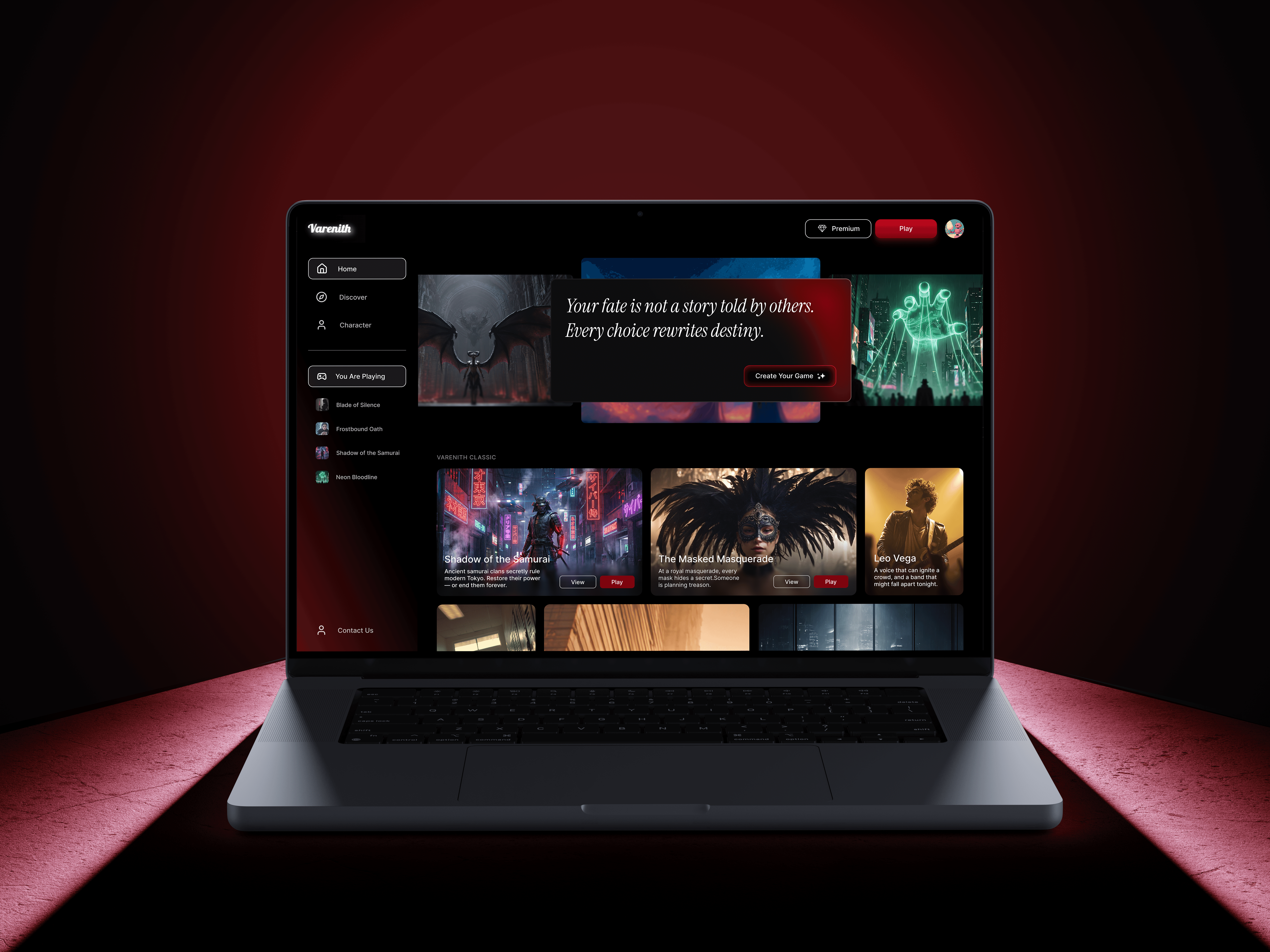
This project explores how generative AI can enable a new form of playable narrative experience, where stories evolve through player decisions instead of fixed scripts.
The platform combines AI-generated narrative, characters, and images to create an interactive storytelling system. Players enter a story world, choose roles, and influence the narrative through their choices.
When I joined the project, the early prototype focused on character creation as the entry point. My role as a Product and UX Designer was to restructure the interaction model so that story generation, player decisions, and AI capabilities could work together as a coherent gameplay system.
My design helped the project secure $125k in funding.

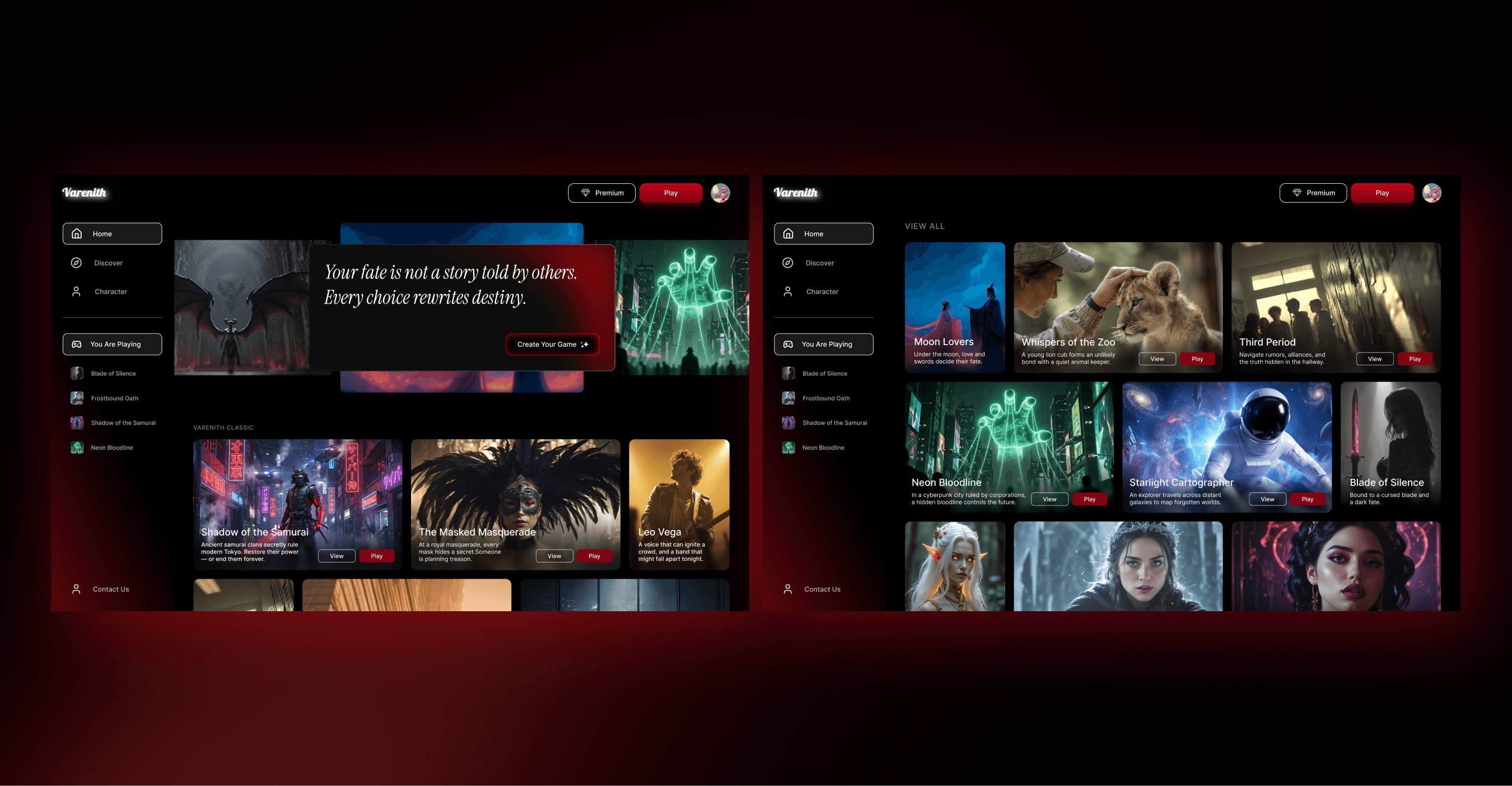
Optimizing Landing Page
Strategic Challenge (Problem):
Visual Stagnation: Standard grid layouts failed to differentiate story genres or highlight high-fidelity AI artwork.
Engagement Drop-off: Lack of a clear visual anchor led to passive scrolling and lower click-through rates.
Design Execution & Impact (Solution)
Staggered Card Layout: Implemented a rhythmic, asymmetrical structure to maximize visual impact and drive story exploration.
Dynamic Discovery: Created a curated browsing experience that improved scannability and "browse-to-play" conversion.
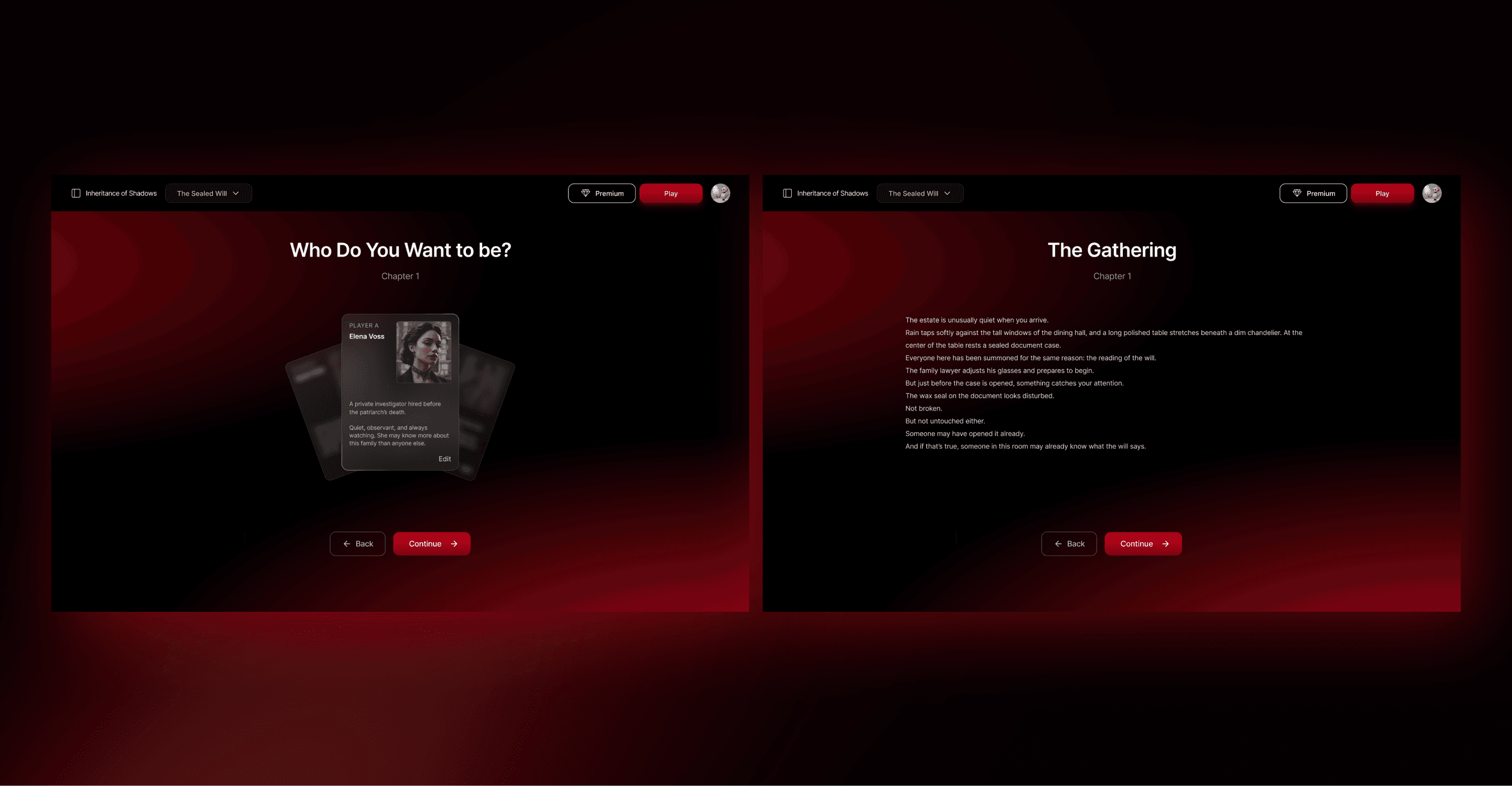
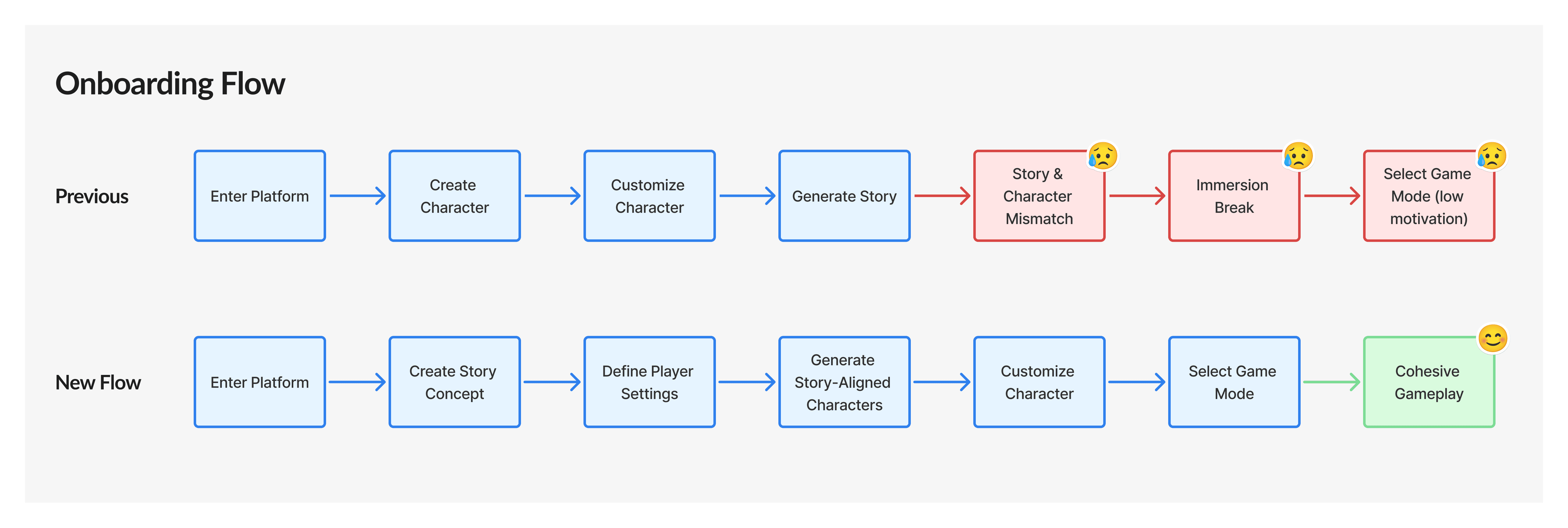
Reframing Onboarding: Aligning Characters with Narrative Context
Strategic Challenge (Problem):
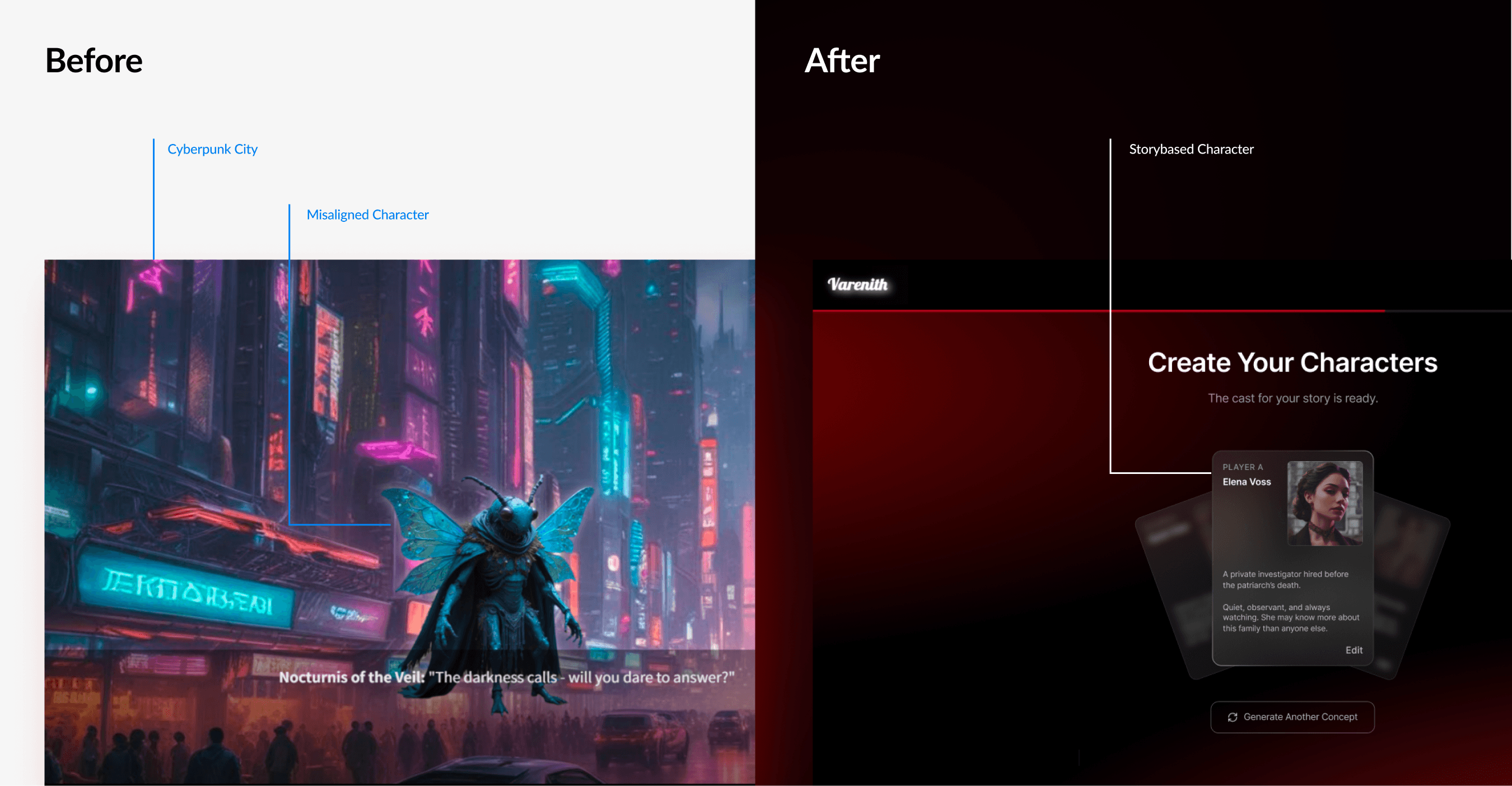
Cognitive Friction: Users struggled to conceptualize or design original characters in a vacuum without an established story world or genre.
Narrative Disconnect: "Character-First" flows often led to personas that felt out of place within the plot, diminishing user immersion and logic.
Development Constraints: From an MVP angle, the AI model lacked the stability to integrate random characters into plots without pre-existing world logic.
Design Execution & Impact (Solution)
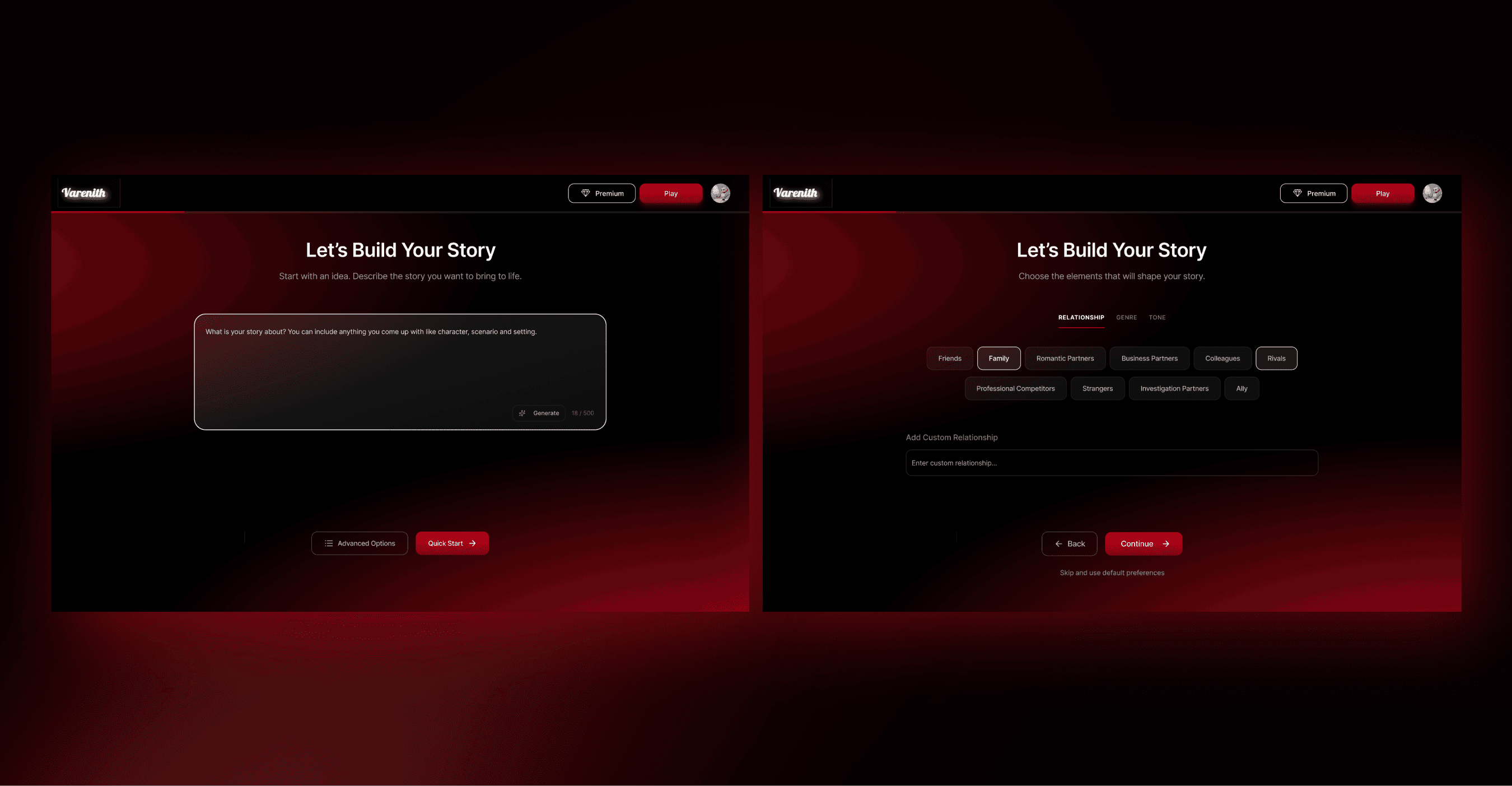
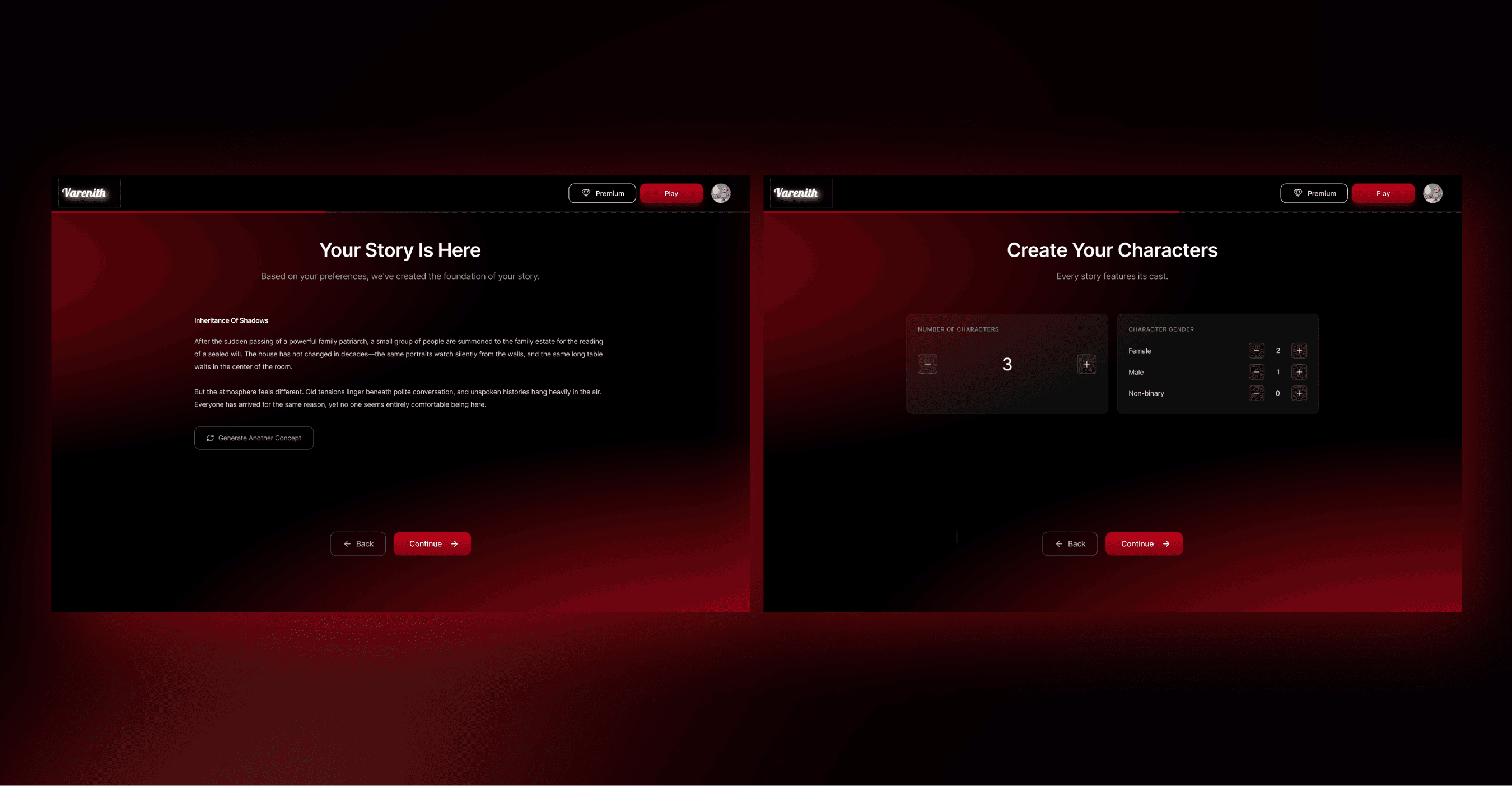
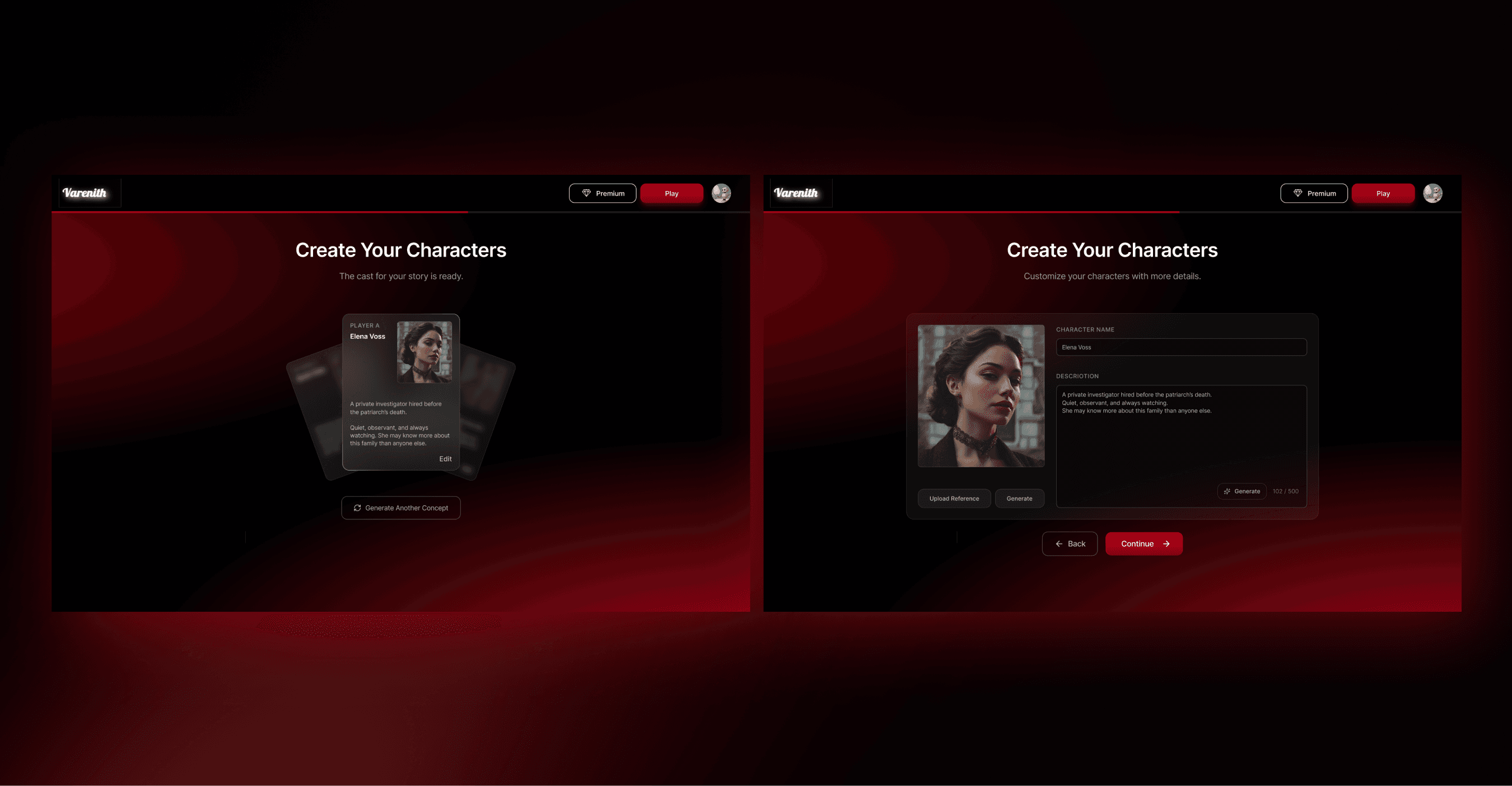
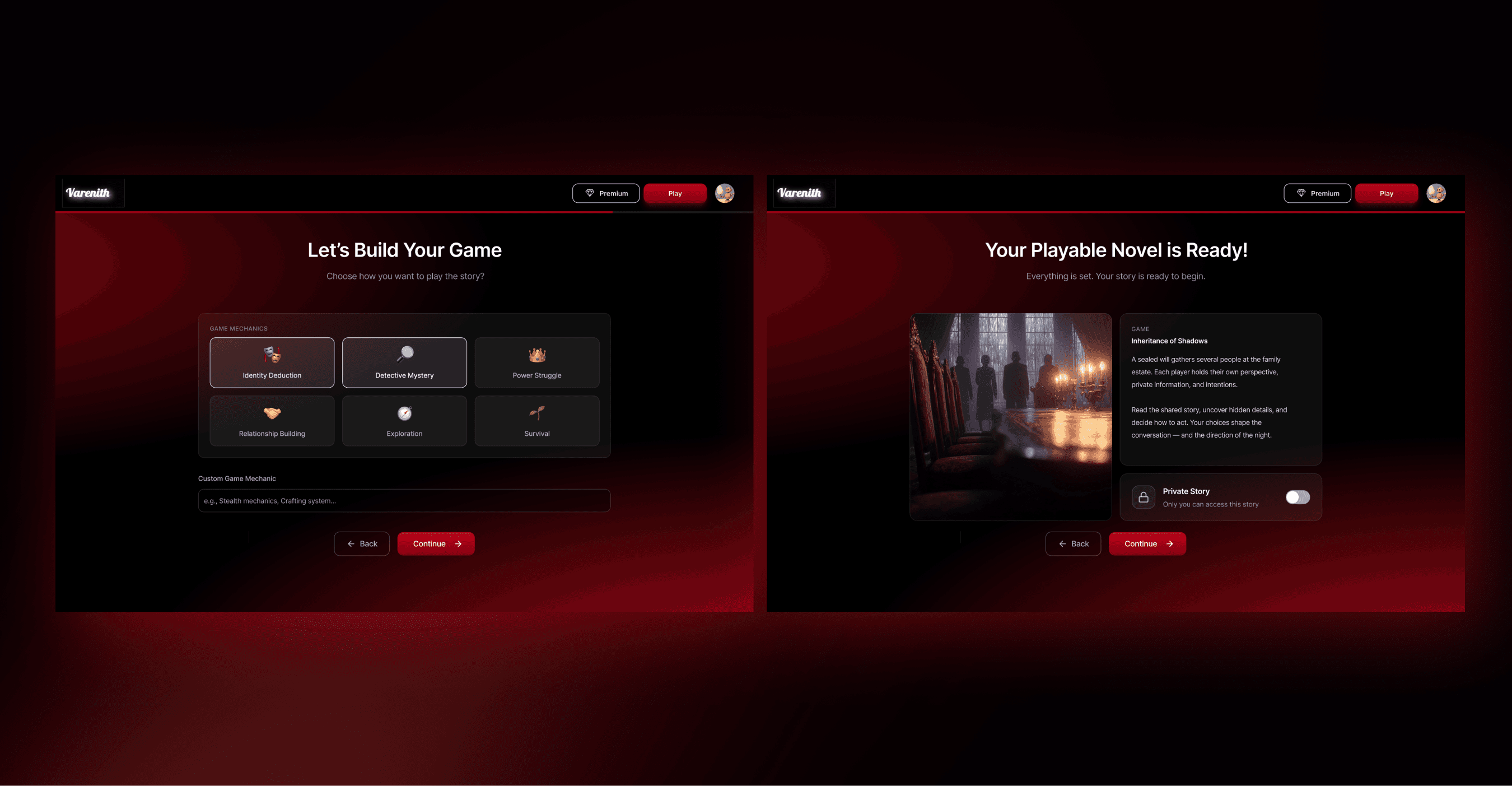
Story-First Architecture: Re-engineered the flow to establish world-building first, providing users with a concrete narrative anchor to lower the creative barrier.
User Mental Models: Leveraged a natural cognitive path (Environment → Identity) to ensure users understood the game's stakes before defining their role.
Structural Stability: Optimized backend performance by setting a "world-state" before character generation, significantly reducing model hallucinations.
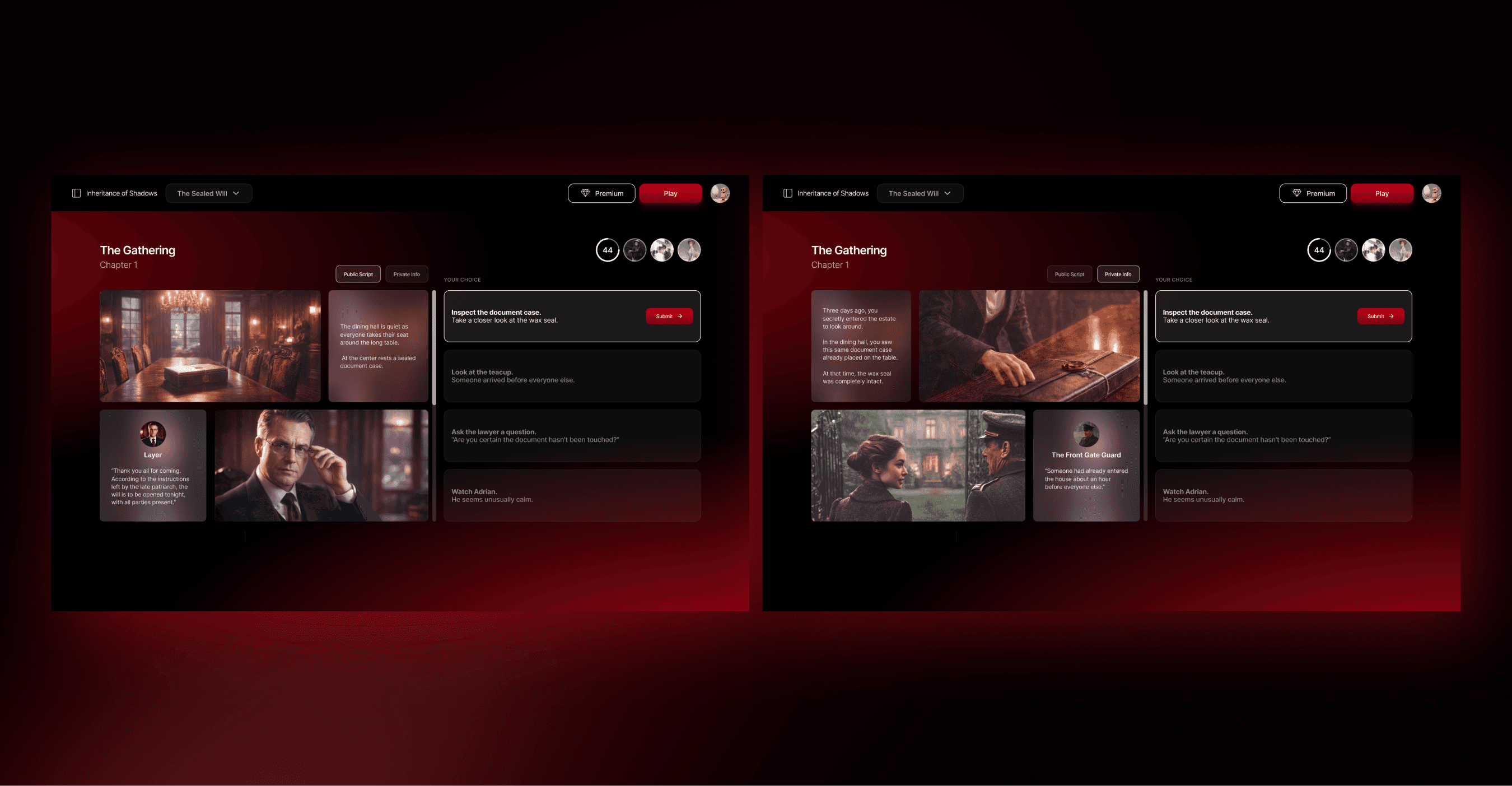
Designing Complex Game Mechanics: Multiplayer Mode
System Architecture:
Interaction Design:
Staggered UI Interface: Structured a split-screen layout with AI visuals/dialogue on the left and interactive options on the right.
Simultaneous Decision Model: Implemented a concurrent selection mechanic to eliminate downtime and reduce player friction.
Cross-Functional Sync: collaborated with developers to ensure real-time data synchronization between AI and multi-user inputs.